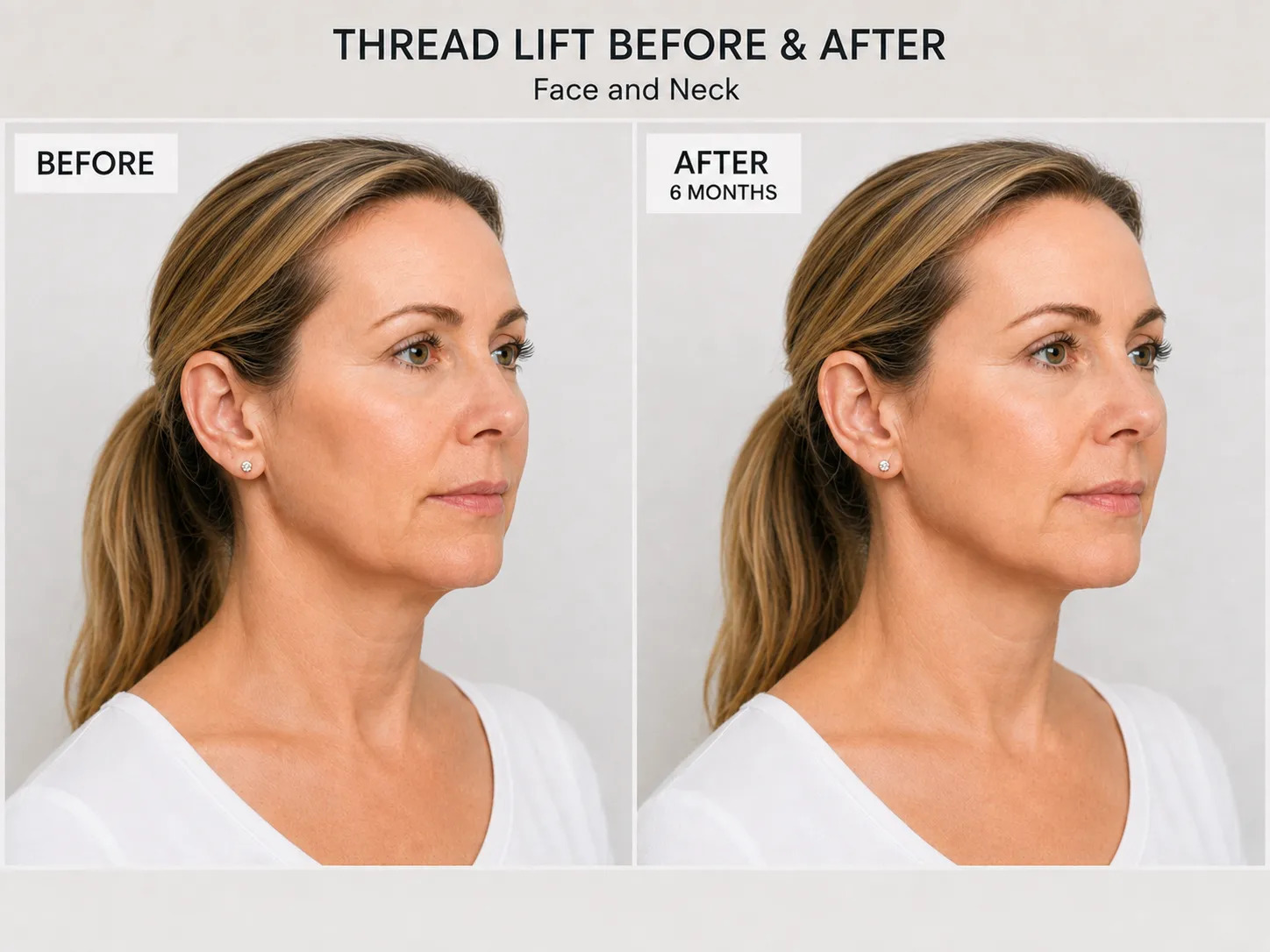
If you are comparing a PDO thread lift vs facelift, the main difference is how each procedure addresses facial ageing and skin laxity. A PDO thread lift uses dissolvable threads to support selected facial tissues, while a facelift is a surgical procedure that can reposition deeper tissues and address more substantial loose or sagging skin.
Neither treatment is automatically better. The more suitable option, if either is appropriate, depends on your facial anatomy, degree of laxity, expectations, medical history and willingness to undergo surgery.
Although thread lifts are sometimes described as a non-surgical facelift, the two procedures work differently and should not be considered equivalent.
PDO Thread Lift vs Facelift: Quick Comparison
| Factor | PDO Thread Lift | Facelift |
| Procedure type | Minimally invasive | Surgical |
| Main purpose | Supports and repositions selected tissue | Repositions deeper tissue and may remove excess skin |
| Anaesthesia | Often local anaesthetic | Local or general anaesthesia depending on the procedure |
| Downtime | Generally shorter | Generally longer |
| Degree of change | Usually more subtle | Can address greater skin laxity |
| Results | Temporary | Generally longer lasting, although ageing continues |
| May be considered for | Mild to moderate concerns | More noticeable facial or neck laxity |
These are general differences only. Individual suitability and outcomes vary.
What Is a PDO Thread Lift?
A PDO thread lift involves placing dissolvable threads beneath the skin. PDO stands for polydioxanone, a material also used in absorbable medical sutures.
The threads are inserted through small entry points using a needle or cannula and positioned to support selected facial tissues. Healing around the threads may also encourage local collagen production, although the amount of collagen stimulation and visible change varies between individuals.
In Australia, PDO threads are regulated as Class III medical devices. The Therapeutic Goods Administration’s guidance on PDO threads explains the relevant regulatory requirements.
Northern Beaches Cosmetic Surgery provides more information about its face and neck thread lifting procedure.
What Can a Thread Lift Address?
A thread lift may be considered for selected concerns such as:
- mild to moderate skin laxity
- early jowls
- reduced jawline definition
- mild cheek descent
- selected areas of sagging skin
Some people consider thread lifting as part of a broader facial rejuvenation plan.
However, a thread lift cannot remove substantial amounts of loose skin and should not be regarded as an equivalent replacement for facelift surgery where greater tissue laxity is present.
For more background on how the procedure works, see the clinic’s thread lift treatment guide.
What Is a Facelift?
A facelift, also known as rhytidectomy, is a surgical procedure used to lift and reposition facial and neck tissues and address sagging skin.
According to Healthdirect’s facelift guidance, the procedure may involve tightening facial tissues, removing or redistributing fat and managing excess skin. Healthdirect also notes that a facelift does not stop the ageing process.
The extent of surgery varies. A more limited procedure may focus on the lower face, while a traditional facelift or neck lift may address a broader area.
Northern Beaches Cosmetic Surgery explains its approach to mid-lower face and neck lift surgery.
PDO Thread Lift vs Facelift Results
The main difference in results is the degree of change each procedure is designed to provide.
A PDO thread lift generally aims for a more subtle, temporary change. Results can be influenced by:
- skin quality and elasticity
- degree of laxity
- treatment area
- type and number of threads
- facial anatomy
- practitioner technique
- individual healing and ageing
Thread lifting may also contribute to collagen stimulation, but the response varies between patients.
If longevity is an important part of your decision, the clinic explains some of the factors in its guide to how long thread lift results may last.
A facelift can address more substantial tissue descent and sagging because deeper structures can be repositioned surgically and excess skin managed where appropriate.
It may affect areas such as the cheeks, jowls, jawline and neck. However, surgery does not address every sign of ageing, including some fine lines, skin texture changes or wrinkles around the mouth.
The Australian Society of Plastic Surgeons’ facelift information also emphasises that facelift surgery is individualised and carries potential risks and complications.
Recovery Time and Downtime
Recovery is another important difference when comparing a thread lift vs facelift.
PDO Thread Lift Recovery
Thread lifting generally involves less downtime than surgery, but it should not be described as having no recovery period.
Temporary effects may include:
- swelling
- bruising
- tenderness
- tightness
- altered sensation
- temporary skin irregularity
Possible complications may also include infection, asymmetry, visible or palpable threads or skin puckering.
The clinic discusses these considerations further in its article about the disadvantages and limitations of thread lifting.
Facelift Recovery
A facelift generally requires a longer recovery because it is surgery.
Swelling, bruising, discomfort and temporary changes in sensation may occur. Patients may also require wound care and other post-operative care while the surgical area heals.
The exact recovery period depends on the extent of surgery and individual healing.
Risks of PDO Thread Lift vs Facelift
Both procedures carry risks, although the type and potential severity differ.
Possible thread lift complications may include:
- swelling and bruising
- pain or tenderness
- infection
- asymmetry
- visible or palpable threads
- skin puckering or irregularity
- altered sensation
- an unsatisfactory cosmetic outcome
Possible facelift complications may include:
- bleeding or haematoma
- infection
- scarring
- delayed wound healing
- altered sensation
- asymmetry
- nerve injury
- complications related to anaesthesia
Ahpra classifies thread lifts as a higher-risk non-surgical cosmetic procedure and requires advertising to provide balanced information about risks, recovery and expected outcomes. Its guidance for higher-risk non-surgical cosmetic procedures also warns against minimising the complexity of these procedures or overstating results.
Who May Be Suitable for Each Option?
A PDO thread lift may be considered when:
- skin laxity is relatively mild
- a more subtle change is being considered
- shorter recovery is important
- surgery is not desired
- temporary results are understood
A facelift may be considered when:
- facial or neck laxity is more substantial
- there is more noticeable loose or sagging skin
- a greater structural change is being considered
- the person is prepared for a longer recovery
- surgical and anaesthetic risks are understood
Age alone does not determine suitability. Facial anatomy, skin quality, overall health, medical history and expectations should all be assessed during a consultation.
Questions to Ask During Your Consultation
Before choosing between a PDO thread lift and facelift, consider asking:
- Which option is more appropriate for my degree of skin laxity?
- What results can I realistically expect?
- What risks and recovery time should I consider?
- How long might the results last in my circumstances?
These questions can help clarify the potential benefits, limitations and risks before deciding whether to proceed.
Making an Informed Decision
When comparing a PDO thread lift vs facelift, the key question is not which treatment is better, but which approach, if any, is appropriate for your anatomy, degree of skin laxity and expectations.
A PDO thread lift is minimally invasive and generally provides a more limited, temporary change. A facelift is surgery and can address more substantial facial and neck laxity, but it also involves a longer recovery period and surgical risks.
Neither treatment is suitable for everyone, and individual results cannot be guaranteed.
If you would like to discuss your options, you can book a consultation with Northern Beaches Cosmetic Surgery for an individual assessment.
Disclaimer: The above content is for general informational purposes only and does not constitute medical advice. It is not intended to diagnose, treat, cure, or prevent any condition. Information may change over time. Please consult a qualified healthcare professional before making any health or treatment decisions.